
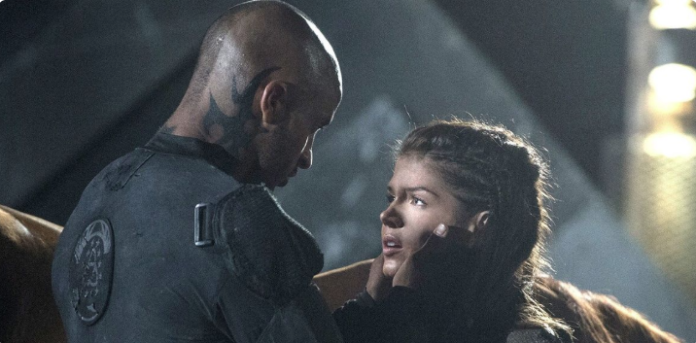
Most people trying to understand All Clans in the 100 get stuck early because the show does not explain everything directly. The series introduces clans through behavior instead of simple definitions. You see how they act before you fully understand who they are. That makes things feel unclear at first. Nevertheless, when you begin to notice a certain regularity in the way they work, then gradually the bewilderment is diminished without necessitating further elaboration.
Each clan follows its own internal logic.
Examining all clans in the 100, one should keep in mind that each group has a different way of working. There are those that are based on strength and combat, and others that are based on loyalty or strict rules. The leadership is also not universal in all clans. Such differences cause tension, whereby survival should unite people. In the absence of common systems, confusion occurs, and confusion normally escalates to conflict.
Trikru stands out as a reference point.
The easiest of all clans to get a grasp of is Trikru. Their organization is structured in some way, with expectations of the members being clear. They are strict adherents of rules, and their choice is often traditional. The viewers spend longer periods looking at them at the beginning, and therefore, they become some form of reference point. Trikru is not difficult to comprehend, and after knowing Trikru, the comparison of other clans will be easier.
Azgeda brings a more aggressive approach.
The other important group in all clans in the 100 is Azgeda, which is more aggressive in its activities. They are very much concerned with control and expansion, and this puts tension on other clans. They have a less balanced approach and more dominance. This contrast provides a focus on the dissimilarity in priorities of the clans. Not all groups are struggling to survive in a similar manner.
Coalition attempts to create stability
All clans in the 100 are, at one time, taken into a coalition system. The concept is to minimize conflict through the formation of shared cross-group leadership. On paper, it is a good idea, but when applied, it is not stable. The various priorities and values complicate the aspect of being a cohesive team. This makes the coalition another bottleneck of tension and not the solution.
The main characters act as bridges between groups.
When discussing the 100 main characters, it becomes clear that they connect different clans together. They move between groups, forming alliances and sometimes causing conflict. This movement helps explain how clans interact with each other. Without these characters, the clan system would feel disconnected. Their roles make the larger structure easier to understand.
Clarke influences more than one group at once.
One of the 100 main characters, Clarke, often makes decisions that affect multiple clans. Her position forces her to think beyond a single group’s needs. This creates pressure, because every choice has wide consequences. It also makes her role more complicated than it appears at first. Her actions show how leadership can extend across different systems.
Bellamy focuses on direct protection.
Among the 100 main characters, Bellamy stands out for his straightforward approach to leadership. He prioritizes protecting his people in immediate situations. This sometimes conflicts with broader strategies that consider long-term outcomes. His style is practical but not always aligned with others. That difference creates tension but also adds balance in decision-making.

Octavia reflects deeper clan integration.
Looking at the 100 main characters, Octavia represents a deeper connection to the clan system itself. She does not just interact with clans; she becomes part of their structure. This gives insight into how clans function internally, not just from the outside. Her journey shows how identity can shift when someone fully adapts to a new system.
Raven contributes in a different way.
Not all the 100 main characters lead through combat or politics. Raven plays a key role through technical knowledge and problem-solving. Her contributions support survival without relying on force or authority. This shows that strength can take different forms. It adds variety to how characters influence the overall situation.
Clans and characters constantly reshape each other.
When reviewing All Clans in the 100, it becomes clear that clans and characters are always influencing one another. Decisions made by individuals affect entire groups, and group dynamics shape personal choices. This interaction keeps the story active and constantly changing. Nothing remains stable for long, which adds complexity.
Understanding both sides makes everything clearer.
Combining knowledge of all clans in the 100 with awareness of the 100 main characters helps make sense of the series overall. The clans provide structure, while the characters drive events forward. Without understanding both, it is easy to feel lost during complex scenes. Together, they create a system that feels complicated but is still grounded in logic.